Posts

Showing posts with the label business

A Visit to Sid Sackson's Archives

Image
After legendary designer Sid Sackson passed, the Strong Museum of Play became the home of his personal papers. This collection includes correspondences, journals, prototypes, sketches, and a bunch more ephemera from his long career. His diaries alone spanned 35 years and were intricately indexed. It will take years to transcribe and digitize them all, but the early parts of his career are up on the Sid Sackson Portal here:  https://sacksonportal.museumofplay.org/s/sackson-portal/page/welcome A year after the portal's launch, Julia Novakovic posted an update on the project's ongoing road map for future transcription and public display:  https://www.museumofplay.org/blog/the-sid-sackson-portal-one-year-later/ But before the portal went online, the only way to see any of these papers was to go personally to the Strong Museum and schedule a visit with the curator. (Many thanks to Julia for giving a rando like me access to these artifacts!) My wife and I paid a visit to Rochester t...

Designing the Job – Part 1: What does a game cost the designer?

Image
Most professional tabletop game designers I've met have a day job. This is just anecdotal, but it seems a full time game designer is VERY rare. I’m more of a pro today than I’ve ever been, but most of my household contribution still comes from an aggregate of freelance projects, Patreon, DriveThruCards, and SkillShare. Only a fraction of comes from traditional game design work. And all of that totaled together is still only about a third of what my wife makes at her normal day job. When I'm working on any game eventually I have to ask myself the scary question: “Is this game worth designing?” Is this game costing me too much money? Is it costing too much time? With this series of short articles, I want to share how I figure out whether a game I'm working on is worth designing and, if so, how much I can expect to earn for my time and expense designing it. First up... How much money has this game cost already? The most common expense is material costs. My prot...

BGGcon Recap: Chrome Ceiling, A New Hope, and the Fun Bits!

Image
Alrighty, time for some more long-form thoughts on how BGGcon went for me professionally. I spent most of my time approaching publishers with my prototypes or demoing my self-published games at the main hall with new friends. I had enlightening conversations with several very smart experienced members of the community, including Eric Lang and Kevin Wilson. I thought going into meetings having just finished a $99,000 kickstarter campaign would be a boost to my credibility, but more people came by talking about my blog, tweets, or my new youtube series. More than once some famous games person came by while I was pitching to a major publisher and say nice things about the game. It was pretty dang awesome. I got some sobering feedback about the current state of my portfolio, but hopeful advice about the future. Let's start with the sobering stuff first. The Chrome Ceiling There was one bit of advice that kept coming up as I worked through each presentation: My games are...

Sale Sheet Sample: Light Rail

Image
I'm going to BoardGameGeekcon for the first time this year and I'm a little nervous! I'm pitching games in a more formal context than I've ever done before. Until now, I've sold three US card games and several international licenses without going through the usual face-to-face pitches and meetings. But it's time to step up a little and do more legwork. Part of that is making a sale sheet for the games I intend to pitch. Usually sale sheets are sent from a publisher to a distributor as a promotion to get the products out to retailers. In this case, my sheets are one step before that process, going from designer to publisher. Different demands in that case. I followed advice from Jay Cormier and Sen-Foong Lim back in this post from five years ago . I also looked at the Akrotiri sale sheet posted a year later, since I'm a big fan of how that game ended up. As Jay and Sen recommend, I'll be bringing this sheet and others along with me as a quick pi...

Creative Cousins: A Tabletop Game Designer Goes To Small Press Expo

Image
For the past three years, my wife has been an active volunteer staffer and coordinator for the Small Press Expo , a long-running comic convention devoted to independent and alternative cartoonists and comics creators. I tag along as a general volunteer floating around the show helping wherever I can. It's a great opportunity to see a vibrant diverse creator community at its most positive and active. Naturally, I couldn't help comparing it to the tabletop community. What follows are my very loose observations and comparisons between the two groups. (Photo Sources: SPX Facebook ) Shared Challenges Comics and tabletop games creators both face the same challenge of selling premium physical goods to niche audiences scattered over long distances. Digital and easy-access alternatives are readily available for comics and games, but they're usually lower priced (or free), thus making them loss-leaders in an effort to actually make a living at the trade. Before that can ev...

Game Design Round Table Interview

Image
This week I'm on the Game Design Round Table podcast mainly to ask advice of the prestigious hosts. The topics range from international licensing, to crowdfunding, to generally how to make a living as a game designer. I ramble a bit, as is my habit, but hopefully there are a few cogent points scattered amidst my mad ravings. Please enjoy! Game Design Round Table Episode 129 0:00:26 – Daniel’s background 0:07:01 – Card counts 0:11:10 – Sharing ideas 0:15:27 – Playtesting 0:18:31 – Kigi 0:22:04 – Publishers in different regions 0:33:39 – International legal matters 0:39:49 – Royalties and crowdfunding 0:53:58 – Upcoming projects   Subscribe and review the show on iTunes as well ! Please support high quality game design discussion like this show. Thanks!

Why are board game boxes so big?

Image
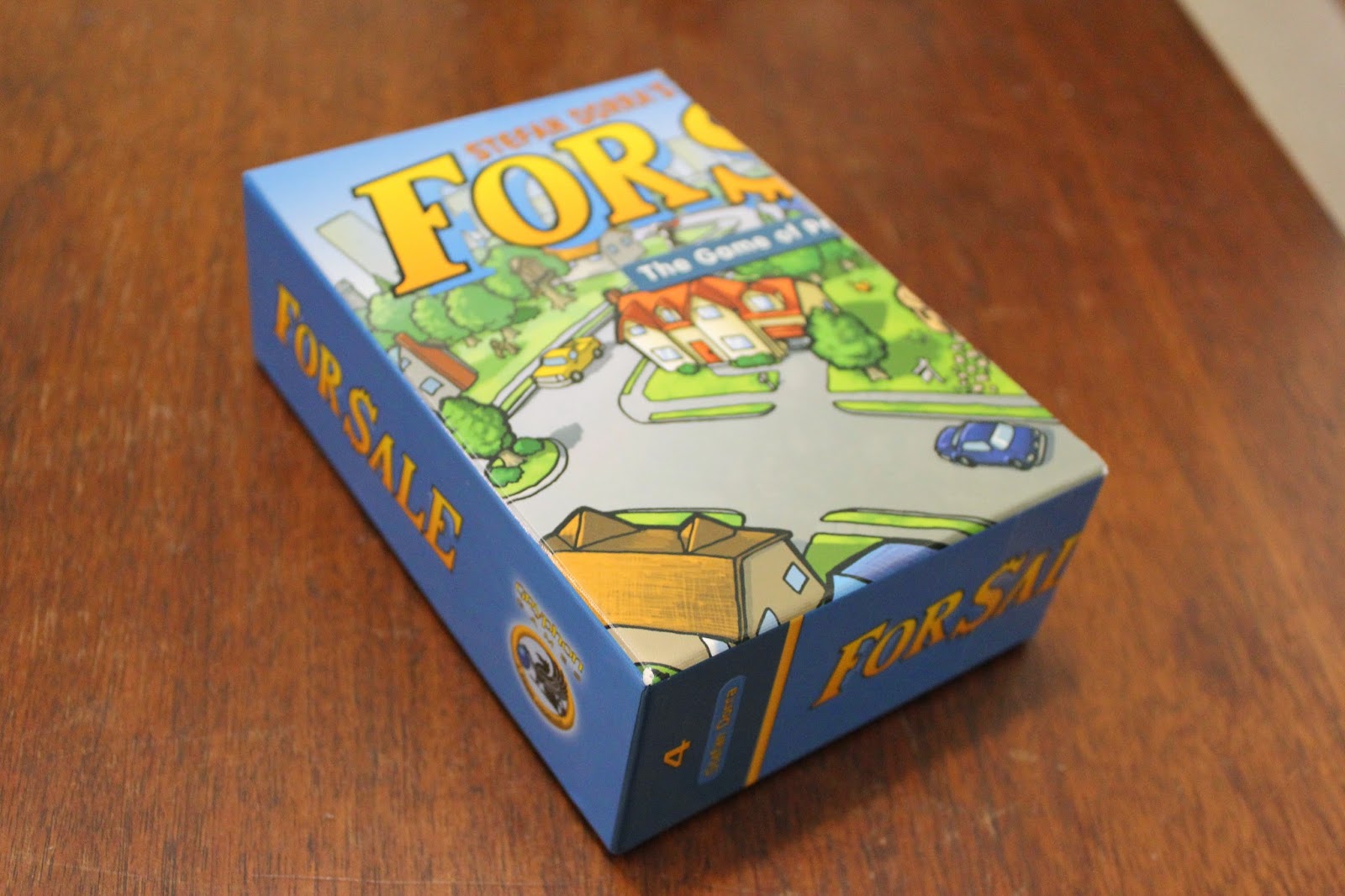
After posting the deboxing video earlier this week, discussion turned to just why the heck boxes are so often far larger than their contents. Each publisher has their own reasons and their own financial pressures to make every one of their decisions, but here are some common reasons. Standardization : It's just plain cheaper to pick from a whole line of readymade boxes of a uniform size rather than make a custom box for each game. Plus, a lot of collectors like uniformity in their shelf display, hence concepts like the Bookshelf series. Expansion : When a publisher signs a game that they think has a strong potential for long-term sales, it makes sense to plan for expansions ahead of time. (Usually this applies to card games specifically, like deckbuilders.) The extra space in the core box is meant to be filled with those future expansions. Transport : Having a fair bit of air in the game box (and the shipping box surrounding the game box) helps keep the contents safe and...

Smart Play Games Sales Report - Q1 2015

Image
It's transparency time again for Smart Play Games! I think it's important to be open about how my business runs and how much it earns. When I began this experiment in high-intensity print-on-demand publishing, I had no real sense of what "success" looked like. But I knew it would depend on others jumping into this market as well. But with such an opaque business model, if anyone else wanted to start their own print-on-demand releases, I figured it would be best to show what goes on behind the curtain. Get on with it! All that said, here are the raw numbers for this quarter. Top 3 sellers each month are highlighted. Month Product Total Sold Gross Sales Earnings 1/1/2015 Arf! 4 $32.96 $9.74 1/1/2015 Bird Bucks 2 $13.98 $2.44 1/1/2015 Kigi 17 $156.69 $47.99 1/1/2015 Koi Pond: A Coy Card Game 19 $199.47 $29.48 1/1/2015 Koi Pond: Four Walls (Promo Card 2) 6 $5.94 $3.82 1/1/2015 Koi Pond: Four Winds (Promo Card 1) 6 $5.94 $3.82 1/1/2015 Koi Pond: Moon Templ...

5 Pitching Lessons from Tabletop Deathmatch (so far)

Image
I've been watching season two of Tabletop Deathmatch with avid interest. The production values, presentation, and overall organization is light-years past season one. (And season one was pretty good!) To recap: Tabletop Deathmatch is a reality show competition held by Cards Against Humanity and its business partners to find the next great tabletop game. The first eight episodes this season focused on introducing and teaching each game in the contest. No judging, just tutorial. This bit was fun to watch for general interest, but I was much more eager to see the subsequent evaluation by a team of top industry judges. So far only four of these judging episodes have been released, but each has offered extremely useful advice for any beginning designer. Here are five lessons I've pulled out so far, in no particular order. Present the game you have on the table right now.   Not the game it could be or the game it used to be. If you've worked on a game a while, it'...

Promoted Tweet Strategy for Tabletop Games

Image
The old saying goes: You're always wasting half your marketing budget, you just never can tell which half. I examined my in-depth analytics about my 2014 sales so I could launch a reasonably geo-targeted twitter campaign promoting the right games in my catalog. For example, despite large populations, I wasn't selling much in Texas or Florida. Those are territories I can aim for at a later date, after more firmly establishing an audience in strongly burgeoning markets like California, Washington state, and right here in North Carolina. I also set my campaign to run in Japan, since I've heard some buzz about my games there. I launched my first campaign with a very softly worded opener: Think and smile with new strategy card games for all ages! https://t.co/tUA8OnUxdU pic.twitter.com/ruciSlKvsY — Smart Play Games (@SmartPlayGames) January 1, 2015 The results of that first week were about 25,000 impressions, with 14,000 from Japan alone. Looking at my 2014 sal...